Choosing a Facial Serum: What Does Your Client Actually Need?
By the Nove Academy Team | Nove Wholesale
Serum shelves can make every bottle sound like the answer. Start with one question: what would your client most like help with today—a hydration step, a brighter-looking complexion, a calming feel, or care for the appearance of fine lines?
You don’t have to explain every ingredient on the shelf to make a useful recommendation. Let’s look at four Roselisa options, the different jobs they’re designed for, and how to help a client choose a step they’ll actually use.
The quick answer: Start with one main goal, then match the serum to that purpose: hyaluronic acid for hydration, Vitamin C for a brighter-looking complexion, Egyptian Rose for the appearance of fine lines, or Chamomile Petals for a calming-feeling step. Check the ingredients and current directions, introduce one new product at a time, and keep moisturizer in the routine.
Start with the client, not the bottle
A useful serum consultation begins with listening. Ask what the client notices, what they’d like to improve in the look or feel of their skin, and what they already use. “My skin feels tight after cleansing” and “I’d like my skin to look brighter” point to different conversations.
Narrow the conversation to one main priority. A client who wants hydration may not need a brightening product at the same time. One clear focus makes the recommendation easier to understand and compare with their current routine.
What would you most like to improve in the look or feel of your skin?
What cleanser, moisturizer, serum, and other active products do you already use?
Have any ingredients or products caused a reaction before?
Would a simple extra step fit your morning or evening routine?
Pro Tip from Nove Academy: Reflect the client’s own words before recommending anything: “You’re looking for a little more hydration and a light feel. Did I get that right?” It keeps the choice collaborative and helps avoid adding products the client doesn’t want.
When hydration is the main goal
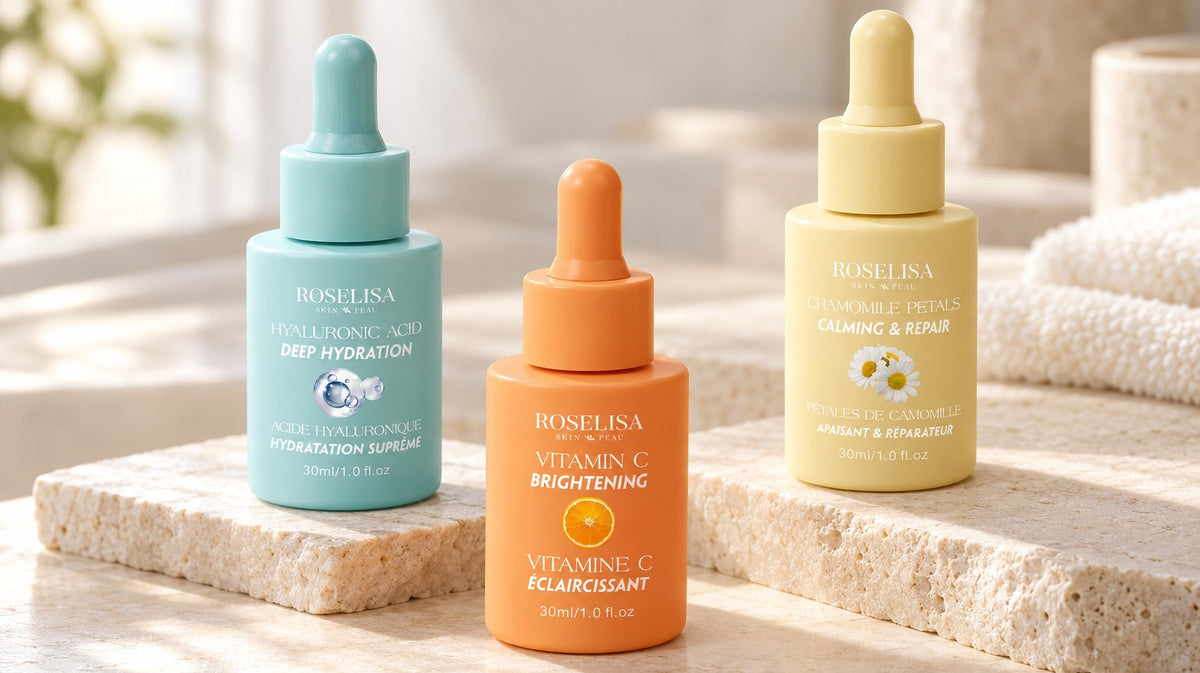
For a client who wants a more hydrated feel and smoother-looking skin, start with the hydration option. Hyaluronic acid is a humectant—an ingredient that helps attract and hold water. That makes it useful in a hydration-focused routine, including one for skin that feels tight while still looking shiny in places.
A lightweight hydration step for clients who want skin to feel softer and look smoother without a heavy texture. Roselisa combines hyaluronic acid with ingredients including panthenol and peony root. Apply a few drops as directed and follow with moisturizer to complete the routine.
Keep the explanation practical: this is the serum step, and moisturizer follows it. Don’t remove a comfortable moisturizer from the routine simply because a serum has been added. If the client’s skin is persistently itchy, cracked, or irritated, help them get health advice rather than treating the serum as the whole answer.
When a brighter-looking complexion comes first
A client asking for a brighter look may be more interested in overall dullness or an uneven-looking tone than in the feel of hydration. The Vitamin C Brightening serum is the purpose-matched option in this range. Explain what it is designed to do without promising that every mark will disappear.
This brightening option is designed for a dull or uneven-looking complexion. Its formula includes vitamin C, niacinamide (vitamin B3), chamomile, and aloe. A useful choice when a brighter-looking finish is the client’s priority, with the same simple few-drops-then-moisturizer routine.
Ingredient names don’t tell you everything about a formula. Roselisa’s page does not state a vitamin C percentage, so there’s no reason to guess its strength or rank it against another brand by concentration. Keep daily sun protection in the client’s routine; a brightening serum does not replace sunscreen. A new or changing spot needs medical advice.
When the goal is a smoother-looking finish
Some clients are most interested in the appearance of fine lines or in skin looking a little smoother and refreshed. Egyptian Rose Wrinkle Care is the option designed around that concern. Describe the look and feel the product supports, rather than promising to erase lines.
Egyptian Rose combines niacinamide, amino acids, and rose extract in a lightweight formula designed to hydrate and improve the appearance of fine lines. It gives clients interested in a smoother-looking complexion a focused daily serum option.
Choose by the client’s goal, not their age. Someone may prefer a straightforward hydration serum even when they have visible lines; another person may want the Egyptian Rose option. Asking which finish matters to them keeps the recommendation personal.
Pro Tip from Nove Academy: When two bottles both sound suitable, bring the choice back to the client’s first answer. “You said hydration was the priority, so let’s start there” is easier to follow than adding both at once.
When the client wants a calming-feeling step
Chamomile Petals Calming & Repair is positioned around soft, comfortable-feeling skin. It can be a useful option to discuss when that is the client’s goal, but a calming product name doesn’t guarantee that every sensitive client will tolerate the formula.
Chamomile extract, green algae, and aloe vera give this serum its calming-care focus. Roselisa describes a lightweight, fast-absorbing formula that leaves skin feeling soft and comfortable. Check the ingredients with clients who have known sensitivities before choosing it for their routine.
Ask about previous reactions and review the complete ingredients, including botanicals. If the skin is currently sore, broken, or has an ongoing rash, pause the new-product recommendation and suggest appropriate health advice. More products aren’t always what uncomfortable skin needs.
Make the home-care plan easy to remember
Once you’ve chosen a serum, show the client where it fits. All four Roselisa serum pages give the same basic directions: apply a few drops to clean, dry skin, gently massage or pat until absorbed, then follow with moisturizer. The maker lists morning and evening use; check the current package for the exact product they’re taking home.
Choose one priority and one serum. Keep the rest of the routine familiar while introducing it.
Read the ingredients, directions, and cautions together. If another product or prescribed care plan may affect use, check before combining them.
Use the directed few drops. A larger amount is not a shortcut to a better result.
Keep the dropper clean and avoid touching it to the face. Close the bottle after dispensing and store it as directed.
Ask how the skin feels as well as how it looks. Stop a product that causes discomfort and follow its label guidance.
Pro Tip from Nove Academy: Write a short routine the client can take home: cleanse, chosen serum, moisturizer, and the appropriate daytime sun-protection step. Use their actual product names so it’s easy to follow.
At the next visit, ask whether the new step fit their routine, whether it felt comfortable, and whether it addressed the goal they chose. That gives you a much better follow-up conversation than moving straight to a second serum.
A Few Common Questions
Does every client need a facial serum?
No. A serum is optional. If the client likes their routine, there is no need to add one.
Which serum is the best place to start?
Start with the client’s main goal. In this range, choose Hyaluronic Acid for hydration, Vitamin C for brightness, Egyptian Rose for the appearance of fine lines, or Chamomile Petals for a calming-feeling step. Check the ingredients and directions before choosing.
Can a brightening serum replace sunscreen?
No. A serum is not a substitute for sun protection. Keep sunscreen and other sun-protection habits in the daytime routine, following their own directions.
Should these serums go on damp or dry skin?
Roselisa’s directions for these four serums say clean, dry skin, followed by moisturizer. Follow the exact product’s current directions instead of applying a general rule for every hyaluronic acid or vitamin C formula.
Should I recommend more than one serum at once?
Start with one product that matches the main goal. It’s easier to follow and assess.
What if a client says their skin is irritated or reactive?
Ask what they notice and check the ingredients and directions. Don’t diagnose or promise that a product will calm it; ongoing or significant irritation calls for health advice.
One clear goal makes the choice easier
A thoughtful serum recommendation starts with what the client wants, checks the exact product purpose and directions, and keeps expectations realistic. Recommend one optional step at a time, explain it in plain language, and leave the choice with the client.
Explore our Nove Academy Guides for more practical product and technique advice, or ask the Nove team for help choosing products for your service.
Professional education from Nove Academy. Follow your training and the current instructions for your exact products and equipment. Product availability can change.


 ellpellz
View all reviews on Google
 Rowan Jeancart
 Kathy Heynemans
 ML M
 Morgen Schick
 Sydney Kolbeck
 sidra Akram
 Dinelle Lajeunesse
 Amanda Dietrich
 Trudy Sands
 lou gaudet
 Dean Prediger (Preds)
 Jessica Hueser
 Ashlyn Evans
 Shekinah Petten
 Shayla Millar
 blaze
 Kela Groeschel
 Shantell Redlick
 Hayley-Rae Gardipy
 Kim Calvert
 Rachel Mcgonigal
 Diane Newton
 Alissa Gaudet